Car Accident Injury Representation in Grants, New Mexico
A car accident can leave you managing several problems at once: an injury that needs treatment, a vehicle that cannot be driven, income you are unable to earn, and insurance questions you are not yet ready to answer. Even an ordinary trip to work, a store, or a medical appointment can become difficult when pain and transportation problems interfere with daily life.
If you were traveling through Grants, the collision may also have interrupted a longer trip. You might receive initial care locally, return home, and then need to coordinate medical records and insurance correspondence across several locations.
Caruso Law Offices helps people injured in Grants car accidents investigate their claims, understand their legal options, and pursue compensation for losses supported by the evidence. We examine responsibility, available insurance, treatment needs, lost income, and the effect of the injury on your life.
Whether the collision happened on I-40, Santa Fe Avenue/Historic Route 66, NM 53, or another road in the Grants area, early attention can help preserve evidence and identify the deadlines that apply.
Call (505) 883-5000 or contact Caruso Law Offices for a free, no-obligation case evaluation. Accepted injury cases are handled on a contingency-fee basis. The signed agreement explains the fee calculation and responsibility for case expenses.
Contact our law office today for a free case evaluation. Call (505) 883-5000 to get started on your injury claim.
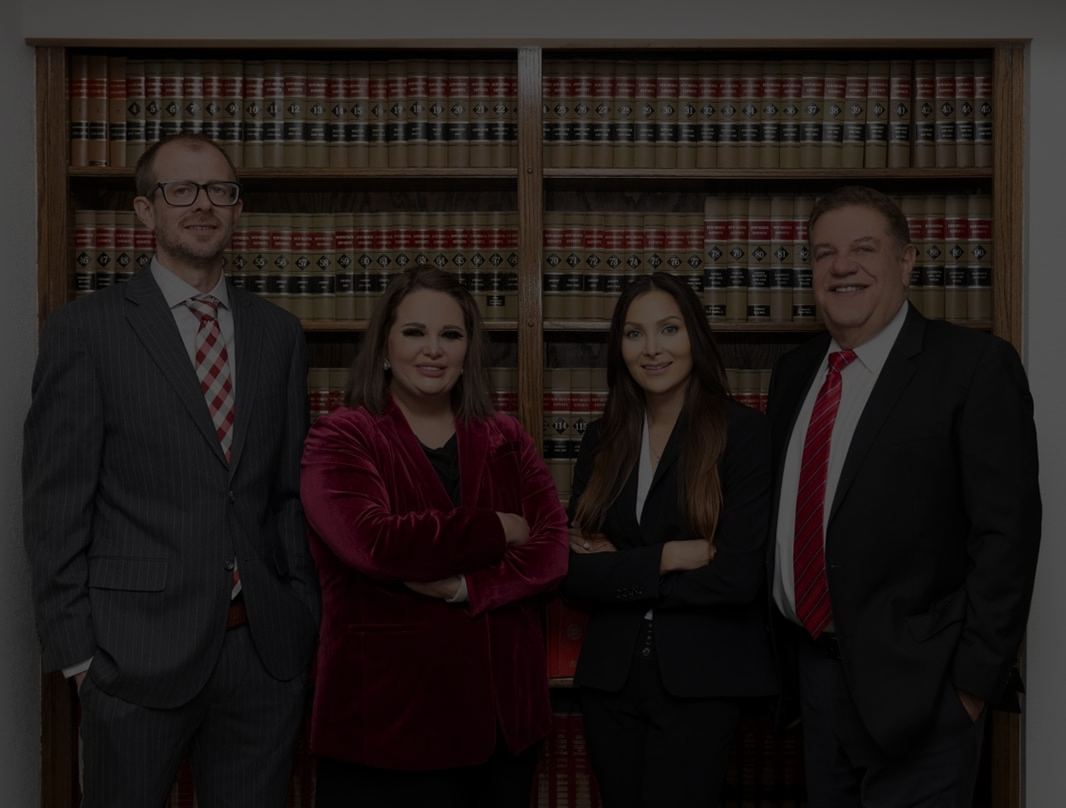
Caruso Law Offices, Car Accident Lawyers
Contact Our Personal Injury Lawyers For a Free Consultation
Contact our law office today for a free case review.
Car Accident Representation for the Grants Community
Grants is a city in Cibola County. Its road network includes I-40 and Santa Fe Avenue, the Historic Route 66 corridor through the city. NM 53 connects with I-40 at Exit 81 and provides access to destinations south and west of Grants. NM 117, accessed from I-40 at Exit 89, is another regional route associated with travel around El Malpais.[^local-roads]
Those routes create different investigative settings. A turning collision along Santa Fe Avenue may require examination of right of way and access to a business. An interstate crash may involve merging or several impacts. A collision outside city limits may require identification of a different investigating agency or legal setting.
The practical losses also differ from person to person. A Grants resident may miss work or need help getting children to school. Someone receiving treatment outside the city may need to document transportation barriers. A visitor may have initial medical records in Grants and follow-up records elsewhere.
We examine those circumstances as part of the claim rather than reducing the case to vehicle damage or a single medical bill.
Santa Fe Avenue, Route 66, and Local Turning Collisions
An intersection or business-entrance collision may raise questions about traffic signals, right of way, sight lines, lane positions, and the timing of each driver’s movement. The investigation should establish what happened before the impact as well as where the vehicles stopped.
Useful evidence may include photographs, witness accounts, vehicle damage, and recordings from nearby properties. An attorney should confirm whether a recording exists and seek preservation promptly. The presence of a business does not guarantee that a camera captured the collision.
Describe the location accurately. Identifying the nearest intersection, business address, or driveway can help avoid confusion when records are requested or accounts are compared.
I-40, Access Ramps, and Multi-Vehicle Crashes
An I-40 collision near Grants may involve a lane change, merge, following-distance dispute, abrupt slowdown, or a series of impacts. Responsibility cannot reliably be determined solely from the vehicles’ final positions.
When it is safe to obtain the information, preserve the direction of travel, nearest exit or mile marker, and the position of the vehicles. Original photographs and dashcam files may help establish the sequence.
If a commercial vehicle was involved, the investigation may also require company information, work assignments, maintenance records, or onboard electronic data. Applicable rules depend on the vehicle and operation.
NM 53, NM 117, and Collisions Beyond City Limits
For a crash beyond Grants, record the exact location and the agency that investigated. A report number, incident card, mile marker, or nearby landmark can help locate the appropriate records.
A Grants mailing address or a description that the crash occurred “near Grants” does not settle jurisdiction or identify the responsible public entity. The location and parties need to be evaluated before an attorney determines the applicable procedures.
Travel to a recreation destination also does not change the need to investigate driver conduct, insurance, injuries, and recoverable losses. The claim should reflect what actually happened.
Cibola County Courts and the Proper Forum
Cibola County is served by New Mexico’s Thirteenth Judicial District. The Cibola County District Court is located in Grants. However, residence in Grants or a crash in the surrounding area does not automatically determine the proper court for every claim. Jurisdiction, venue, the parties, and the facts must be evaluated.[^courts]
A municipal traffic case and a civil injury claim serve different purposes. A citation does not, by itself, establish every element of negligence or determine the compensation owed to an injured person.
If a collision occurred in Indian Country or involves a tribal defendant, civil jurisdiction requires separate review. The road’s public-highway designation alone does not resolve that issue; the location, parties, and nature of the claim matter.[^tribal-jurisdiction]
Help for People Injured While Passing Through Grants
If you return home after a crash, keep the information needed to reconnect with the investigating agency. Preserve initial treatment records, discharge instructions, towing documents, photographs, and insurance correspondence.
Tell later medical providers about the collision and the care already received. Keep records of work restrictions and symptoms that interfere with ordinary activities.
A lawyer can examine the applicable law, policies, and court requirements without assuming that your home address determines every issue. Discuss travel limitations and the practical steps needed to participate in the claim.
Why Choose Caruso Law Offices for a Gallup Car Accident Claim?
A Focus on Motor Vehicle Injury and Wrongful Death Cases
Caruso Law Offices concentrates on motor vehicle injury and wrongful death cases and represents people with Gallup accident claims.[^firm-focus]
That focus matters when the case requires more than exchanging repair estimates. Serious injuries can involve future treatment, reduced earning capacity, multiple policies, and the need for expert evidence. The work should address those issues as they arise.
Experience From the Insurance Defense Perspective
Founder Mark Caruso previously represented insurance companies before turning to representation of accident victims. He and his wife opened Caruso Law Offices in 1987.[^firm-background]
That background provides a perspective on the questions insurers raise about responsibility, treatment, and damages. We use it to organize the supporting evidence, address disputes, and help clients understand how an offer relates to the claim.
Attention to Your Recovery and Everyday Responsibilities
An injury claim can overlap with medical appointments, unpaid bills, work restrictions, and transportation problems. We help organize the legal and insurance issues so you can make informed decisions.
Clear communication is part of that work. You should understand what information is needed, what remains disputed, and why a proposed step may help. If you receive care outside Gallup, tell us where you are treating so the records can reflect the course of your recovery.
Preparation for Negotiation and Litigation
A persuasive settlement demand should explain both liability and the losses supported by the evidence. If negotiation does not produce an acceptable resolution, litigation may be necessary to obtain records, examine disputed accounts, or present the case in court.
We explain the options, costs, and uncertainties involved. The client decides whether to accept a settlement. The outcome of a claim cannot be guaranteed.
Contingency-Fee Representation
A free consultation allows you to discuss whether the firm can assist. If your case is accepted, the signed fee agreement explains how attorney’s fees are calculated and how expenses are handled.
Attorney’s fees and case expenses are separate matters. Review both before signing, including the responsibility for expenses if the case does not result in compensation.[^fees]
What Our Clients Say

“Caruso law proficiency in managing my injury claim was remarkable. The lawyers were knowledgeable, empathetic, and proactive, securing a favorable outcome that greatly assisted my recovery.” C.G.
How Our Grants Car Accident Attorneys Can Help
Preserve Evidence That May Be Lost
The investigation may involve the crash scene, photographs, witness accounts, vehicle damage, recordings, and electronic information. Depending on the facts, we may seek preservation of business surveillance, commercial records, or a damaged vehicle.
Evidence can be overwritten, repaired, transferred, or discarded. Identify potential sources promptly, including any dashcam or business camera you observed. A preservation request is useful even though it cannot guarantee that the requested material exists.
Investigate Responsibility and Potential Defendants
We examine the conduct that caused or contributed to the collision. Where supported by the facts, the investigation may also involve an employer, vehicle owner, maintenance provider, manufacturer, or another responsible party.
A company logo does not establish every legal relationship. The vehicle’s use, the driver’s assignment, ownership, and the connection between a party’s conduct and the injury require examination.
Identify Available Insurance
Potential coverage can include liability, commercial, umbrella, uninsured motorist, underinsured motorist, medical payments, or other policies. Coverage depends on insured status, vehicle use, policy terms, and governing law.
If a traveler’s policy was issued elsewhere, it may require its own analysis. A license plate from another state does not establish whether the driver has coverage.
Insurance limits and damages are different questions. Both need to be understood before evaluating a realistic recovery.
Document Medical, Employment, and Personal Losses
Medical records should explain the injury, treatment, restrictions, and prognosis. Wage or business records should substantiate earnings lost because of the injury. Receipts may support related expenses where those costs are legally recoverable.
If care starts in Grants and continues elsewhere, the records should show that sequence. Lasting injuries may require qualified medical, vocational, or economic opinions concerning future treatment or earning limitations.
Specific descriptions of daily difficulties also matter. Explain how the injury affects driving, sleep, lifting, household duties, and other activities without exaggeration.
Address Insurance Communications and Settlement Terms
We prepare demands, respond to disputes, and explain offers and releases. An offer should be considered alongside supported damages, available coverage, future needs, and the claims that signing a release would end.
The total settlement is not necessarily the amount you receive. Fees, expenses, and valid medical liens or reimbursement obligations affect the final distribution. You should understand the expected deductions before making a settlement decision.
Evaluate Deadlines and Prepare Litigation
An open insurance claim does not preserve the right to sue indefinitely. We examine filing requirements, potential government notice obligations, and the forum appropriate to the case.
If a lawsuit is necessary, we explain the process and continue evaluating settlement opportunities as the evidence develops. Tribal, federal, and other jurisdictional questions should be identified early so they can receive the required legal review.
Types of Grants Car Accident Cases We Handle
Different crash patterns raise different factual questions. Our representation includes:
- Rear-end collisions: We examine following distance, traffic conditions, braking, and the sequence of impacts, particularly when several vehicles are involved.
- Intersection and side-impact crashes: Important issues may include right of way, signal color, turning movements, visibility, and witness vantage points.
- Head-on collisions: These cases may involve lane departures, unsafe passing, impairment, fatigue, or loss of control.
- Lane-change and merging collisions: Photographs, vehicle damage, witness accounts, and available video can help establish where each vehicle was traveling.
- Multi-vehicle crashes: We investigate the order of impacts and the actions of each driver instead of assuming one person caused every injury.
- Hit-and-run collisions: We look for identifying evidence and investigate potentially available uninsured motorist coverage.
- Crashes involving trucks, delivery vehicles, or other commercial vehicles: Company records, work assignments, maintenance history, and electronic evidence may be important.
- Rideshare collisions: We examine the driver’s activity at the time of the crash and the personal and commercial policies that may apply.
- Passenger injury claims: We evaluate claims involving the driver of the passenger’s vehicle, other motorists, and applicable insurance.
- Fatal crashes: We help evaluate wrongful death claims and the representative and beneficiary issues involved.

Deep Albuquerque Roots
Local Attorneys with a Legacy of Success
“Albuquerque isn’t just where we practice law-it’s where we grew up, built our lives, and chose to serve our community. When you need someone who truly understands New Mexico, we’re here to fight for you.”
Deep Albuquerque Roots
Local Attorneys with a Legacy of Success
“Albuquerque isn’t just where we practice law-it’s where we grew up, built our lives, and chose to serve our community. When you need someone who truly understands New Mexico, we’re here to fight for you.”
Why the Location and Type of Crash Matter
The following examples illustrate how an investigation may develop. They do not describe an actual client’s case or rank Grants roads by crash frequency.
A Turning Collision Along Santa Fe Avenue
Suppose a driver turns into traffic from a business entrance and another vehicle strikes the turning vehicle. The investigation may need to establish the vehicles’ approach, right of way, visibility, lane positions, and opportunities to avoid the impact.
Original photographs, witnesses who saw the movement, and available recordings may help test conflicting accounts. The location of the damage is relevant, but it should be examined with the rest of the evidence.
A Chain-Reaction Crash on I-40
Several vehicles may collide within seconds. The injured person might recall one jolt, while physical evidence indicates more than one impact.
The sequence can affect responsibility and the medical analysis. A lawyer may compare damage patterns, driver accounts, independent observations, and available electronic information. Final vehicle positions alone do not explain everything that occurred.
A Crash During a Trip on NM 53 or NM 117
If the collision occurs outside Grants, preserve the precise location and investigating agency’s name. Do not assume that a records request to Grants Police will obtain a report held by another agency.
The attorney should examine the location, parties, vehicle use, and available insurance. The road number does not, by itself, resolve every jurisdictional or procedural question.
A Collision Involving a Driver Who Was Working
A delivery assignment or business trip can raise questions about an employer and applicable commercial insurance. Preserve company names, vehicle markings, and information about the driver’s activity.
Work records and policy review may be important. The fact that a vehicle was being used for business does not automatically establish that every federal trucking rule applies or that a particular company is liable.
A Work-Zone or Public-Road Claim
When safe, photograph signs, barriers, lane arrangements, and the condition you believe contributed to the collision. Record the date and precise location because conditions may change before the claim is investigated.
A case may involve a driver, contractor, or public entity. Government-related claims require separate attention to immunity, statutory waivers, notice, and lawsuit deadlines. A road condition alone does not prove that a legally viable claim exists against the government.
Common Causes of Car Accidents
A collision may result from one careless act or a combination of decisions. Causes that can support an injury claim include:
- Distracted driving, including looking at a phone or an in-vehicle display.
- Speeding or traveling too fast for the conditions.
- Following too closely.
- Failing to yield during a turn or when entering traffic.
- Running a red light or stop sign.
- Driving while impaired by alcohol or drugs.
- Drowsy driving.
- Unsafe passing, merging, or lane changes.
- Aggressive driving.
- Negligent vehicle maintenance.
Weather and road conditions can affect a collision, but they do not automatically excuse a driver’s conduct. The question is whether the driver acted reasonably under the circumstances and whether any failure contributed to the harm.
Similarly, a traffic citation can provide information without resolving every issue in a civil claim. A successful case requires evidence connecting the negligent conduct to the crash, the injury, and the claimed losses.
How Negligence Is Established
Most car accident injury claims require proof of four related elements:
- Duty: The defendant had a legal obligation to use reasonable care under the circumstances.
- Breach: The defendant failed to meet that obligation.
- Causation: The failure caused or contributed to the accident and the injury.
- Damages: The injured person suffered compensable harm.
For example, proving that a driver was looking at a phone is not enough by itself. The evidence must connect that distraction to the collision and connect the collision to the injuries and losses being claimed.
In a typical civil negligence case, the claimant must establish the necessary facts by a preponderance of the evidence—meaning the facts are more likely true than not. The criminal standard of proof does not govern an ordinary civil injury claim.
Injuries That Can Affect a Car Accident Claim
Crash-related injuries may include neck and back injuries, fractures, shoulder or knee damage, concussions and other brain injuries, spinal cord injuries, burns, facial injuries, and internal injuries.
Some consequences are immediately apparent. Others become clearer as the person undergoes evaluation and attempts to return to ordinary activities. The CDC notes that concussion symptoms may appear immediately or develop over hours or days. Worsening headache, repeated vomiting, confusion, seizures, or difficulty waking after a head injury warrant emergency medical attention.[^concussion]
A claim should address the person’s actual condition, including functional limitations and medically supported future needs. It should not assume that limited visible vehicle damage proves there was no injury.
A Preexisting Condition Does Not Automatically Defeat Your Claim
A person with an earlier back, neck, or other condition may still recover for crash-related worsening. New Mexico’s damages instruction distinguishes the aggravation caused by the defendant from losses the person was already experiencing. It also recognizes that unusual susceptibility to injury does not, by itself, eliminate the defendant’s responsibility.[^preexisting]
Accurate prior records and a clear comparison of symptoms and function before and after the crash are particularly important.
Compensation Potentially Available After a Grants Car Accident
Compensation depends on liability, the evidence, the losses, and any applicable legal restrictions. Potential categories include:
|
Category |
What the claim may address |
Evidence that can help |
|
Medical expenses |
Crash-related evaluation, treatment, rehabilitation, medication, and supported future care |
Records, bills, treatment recommendations, and expert opinions |
|
Lost income |
Earnings lost because the injury prevented work or required reduced hours |
Payroll records, employer verification, work restrictions, and business records |
|
Reduced earning capacity |
A lasting reduction in the ability to earn income |
Medical restrictions, employment history, and vocational or economic analysis |
|
Pain and other personal losses |
Physical discomfort, emotional effects, limitations, and loss of enjoyment associated with the injury |
Treatment records, specific accounts of daily limitations, and appropriate testimony |
|
Property damage |
Vehicle repair or value issues and other property losses recoverable under the facts |
Photographs, estimates, valuation information, and receipts |
|
Related expenses |
Reasonable, legally recoverable costs associated with the injury |
Receipts and evidence explaining why the expense was necessary |
Punitive Damages Require Additional Proof
Punitive damages serve punishment and deterrence purposes. They are not automatic in an injury case. New Mexico’s instruction permits consideration of them when the required underlying recovery and culpable conduct are established, such as malicious, willful, reckless, or wanton conduct. An allegation of ordinary carelessness alone does not establish entitlement.[^punitive]
A drunk-driving or other serious misconduct case may warrant investigation of punitive damages, but the facts and legal requirements must be examined.
Wrongful Death Requires a Different Analysis
A fatal collision raises questions about the proper representative, statutory beneficiaries, and recoverable losses. New Mexico generally requires the wrongful death action to be brought in the name of the deceased person’s personal representative. The distribution of proceeds follows the applicable statute.[^wrongful-representative]
Our attorneys can explain the steps involved and help the family avoid assuming that any relative can file an individual wrongful death lawsuit.
Deadlines for New Mexico Car Accident Lawsuits
An insurance claim and a court lawsuit are different processes. Reporting a crash, receiving a claim number, or exchanging settlement offers generally does not, by itself, preserve the right to sue indefinitely.
|
Type of claim |
General deadline or requirement |
|
Personal injury claim against a private party |
Generally three years from accrual; in an ordinary crash injury case, usually the crash date, under NMSA 1978, § 37-1-8.[^injury-deadline] |
|
Claim for injury to property against a private party |
Generally four years under § 37-1-4.[^property-deadline] |
|
Wrongful death claim against a private party |
Generally three years from the date of death under § 41-2-2.[^death-deadline] |
|
Claim governed by the New Mexico Tort Claims Act |
Generally a two-year lawsuit deadline under § 41-4-15, subject to case-specific issues.[^government-limitations] |
|
Notice for a Tort Claims Act claim |
Generally written notice within 90 days of the occurrence for injury or loss; wrongful death has a separate six-month notice provision measured from the occurrence of the injury resulting in death.[^government-notice] |
Notice must reach the appropriate recipient. A police report or communication with an adjuster should not be assumed to satisfy a government notice requirement.
Special rules can apply to minors, legally incapacitated people, particular defendants, and other circumstances. Insurance policies also contain notice and cooperation requirements. Have the deadlines evaluated promptly instead of relying on a possible extension. FAQ 2 explains these distinctions in more detail.
Evidence That Can Strengthen Your Claim
A strong claim combines evidence of how the crash happened with evidence of what it did to your life.
Photographs, video, witnesses, vehicle damage, and available electronic information may help explain the collision. Medical records, treatment recommendations, wage records, receipts, and specific descriptions of limitations may help establish damages.
Preserve original files when possible. Keep copies of insurance correspondence and record the dates of important conversations. If a vehicle may contain relevant evidence, discuss preservation before repairs, sale, or disposal.
A police report is useful investigative material, but its conclusions do not automatically decide civil liability. Whether a report or a statement within it can be used at trial involves separate evidentiary rules.
Mistakes That Can Make a Claim More Difficult
- Settling before understanding the prognosis: A release can end the claim even if additional treatment later becomes necessary.
- Guessing about speed, distance, or fault: Separate what you observed from what you are unsure about.
- Leaving unexplained gaps in care: Explain barriers such as transportation, cost, scheduling, or illness to your provider and attorney.
- Signing an overly broad medical authorization without review: Prior records can be relevant, but a request should be evaluated for its scope.
- Discarding evidence: Keep messages, photographs, recordings, and damaged items that may matter. Do not delete relevant material to improve how the case appears.
- Assuming an adjuster’s deadline replaces the legal deadline: Have both evaluated.
- Focusing only on the settlement total: Attorney’s fees, expenses, medical liens, and reimbursement obligations affect the amount you ultimately receive.
10 Frequently Asked Questions About Grants Car Accident Claims
- What should I do immediately after a car accident in Grants?
Get help, meet your reporting obligations, and preserve evidence when it is safe. Your physical condition and the danger at the scene take priority over collecting claim information.
Give dispatch a precise location
Call 911 when someone is injured, needs emergency assistance, or there is an immediate hazard. On I-25, describe the direction of travel, nearby exit or mile marker, and whether the vehicles are on the roadway or shoulder. On Main Street or another local road, identify the nearest intersection, address, or recognizable location.
Follow the dispatcher’s instructions. Do not stand in moving traffic to photograph vehicles, and do not pursue a driver who leaves the scene. Remain at the scene and fulfill applicable duties to exchange information and provide reasonable assistance.
Report the collision as required
New Mexico requires immediate notice to the appropriate law-enforcement agency when a crash involves bodily injury, death, or apparent property damage of at least $500. Within a municipality, notice goes to police; outside a municipality, it goes to the county sheriff or nearest State Police office.[^crash-reporting]
Section 66-7-207 also requires a written report to the Department of Transportation within five days for qualifying crashes. Confirm how to fulfill that obligation and any applicable local requirements. Do not assume that notifying an insurer satisfies either duty.[^written-reporting]
The Valencia Regional Emergency Communications Center lists (505) 865-9130 for non-emergency police assistance on its “When to Call 911” page. Use 911 for an emergency.[^nonemergency]
Exchange information and identify witnesses
Obtain driver names, contact details, insurance information, and vehicle information. Record company names or markings if a driver may have been working.
Ask witnesses for contact information and note what each person actually observed. Someone who arrived after the collision may provide different information from someone who saw the vehicles approach.
Preserve photographs, recordings, and documents
Take safe photographs of the wider scene, signs, lane markings, vehicle positions, damage, and relevant road conditions. Keep original files and back up dashcam footage before it is overwritten.
Retain towing receipts, claim numbers, estimates, and messages. If a vehicle may contain important evidence, discuss preservation before repairs or disposal.
Obtain medical evaluation and explain symptoms
Tell the clinician about the accident, your symptoms, and relevant prior conditions. Describe later changes accurately and follow medically appropriate recommendations.
Declining an ambulance does not establish that you were uninjured. Conversely, treatment should be based on your condition rather than an attempt to create a larger claim.
Request the report from the correct agency
If Grants Police investigated, use the village’s official public-records information or request form and identify the crash date, location, names, and report number if available. If another agency investigated, direct the request to that agency.[^crash-records]
Ask a Grants car accident lawyer to review the situation promptly if you were injured, responsibility is disputed, a business or public entity may be involved, or an insurer requests a release.
- How long do I have to file a car accident claim in Grants, and are there exceptions?
The deadline depends on the claim and the defendant. For an ordinary personal injury lawsuit against a private party, the general New Mexico period is three years, usually measured from the crash in a typical accident case.[^injury-deadline]
A Grants intersection crash and an I-40 collision may involve the same general state limitation period, but the identity of the defendant and type of claim can change the requirements. The deadline governs starting the appropriate court action; it should not be confused with the time to notify an insurer or the time an adjuster takes to review a demand.
Different losses can involve different deadlines
A claim for injury to property generally has a four-year limitation period. A private-party wrongful death claim generally has a three-year period beginning on the date of death. If an injured person dies after the crash, the wrongful death date and other claim dates may differ.[^property-deadline][^death-deadline]
Those distinctions do not make delay advisable. Witnesses become harder to locate, video may disappear, and a defendant’s identity may take time to establish.
Government claims involve notice and lawsuit requirements
If the case falls under the New Mexico Tort Claims Act, the general lawsuit period is two years. There is also a notice requirement: ordinarily 90 days for an injury or loss claim. The wrongful death notice provision generally allows six months from the occurrence of the injury resulting in death. These are separate requirements, and satisfying notice does not replace filing a lawsuit.[^government-limitations][^government-notice]
The correct notice recipient depends on the governmental entity. The Act also involves immunity and the question of whether a statutory waiver permits the claim.
Minor status and legal incapacity require individual analysis
Section 37-1-10 addresses extensions for minors and legally incapacitated people in claims governed by the relevant chapter. Whether it applies, when the protected status ends, and how it interacts with the ordinary period require analysis of the particular claim. Government cases have different rules and should be reviewed immediately, including when a child is injured.[^minor-incapacity]
A parent’s related claim may have a deadline different from the child’s claim. Waiting for a child to reach adulthood can also make the evidence much harder to develop.
Later diagnosis does not automatically create a new deadline
The timing of discovery can matter in some cases, but a later MRI, new diagnosis, or continuing treatment does not automatically restart the clock. Legal incapacity is also not the same as simply being injured or unable to work.
Similarly, an unidentified driver or a driver who leaves New Mexico does not automatically mean that a fresh period begins when that person is located. Any applicable exception must be established under the governing law.
Settlement discussions do not provide a dependable extension
Do not assume that an open claim, a payment discussion, or a statement that an insurer is still investigating protects the deadline. When time is running short, an attorney may need to file suit while investigation or settlement discussions continue.
Bring the crash date, available reports, the names of potential defendants, and insurance correspondence to the consultation so the attorney can evaluate each applicable requirement.
- How much is my Grants car accident case worth, and what compensation can I recover?
A reliable valuation requires examination of liability, medically supported injuries, financial losses, the impact on daily life, and available recovery sources. There is no universal settlement amount for a particular diagnosis.
Two people with similar imaging findings may have very different losses. One may return to ordinary activity quickly; the other may need surgery, miss substantial work, or experience permanent limitations. The evidence must explain those differences.
Medical expenses and future care
The claim may address reasonable, crash-related treatment expenses, including evaluation, surgery, rehabilitation, and medication. Future care needs should be supported by evidence of what treatment is expected, why it is related to the crash, and what it is likely to cost.
An unpaid bill and a provider’s estimate are different forms of evidence. A lawyer examines the underlying records rather than simply adding every number appearing on a statement.
For a lasting injury, the evaluation may require medical opinions or a life-care assessment. A possibility that treatment could be needed is different from a sufficiently supported future need.
Lost earnings and earning capacity
Past wage loss concerns income you could not earn because of the injury. Employer records, work restrictions, and payroll information help substantiate it.
Reduced earning capacity concerns your ability to earn in the future. You may return to work but lose access to overtime, physical duties, advancement opportunities, or another line of work. Those consequences may require vocational and economic evidence.
For a self-employed person, gross sales do not necessarily equal lost income. Business records should distinguish revenue, expenses, profit, and the effect of the injury. A Grants business owner who cannot complete scheduled jobs may need invoices, appointment records, canceled contracts, and evidence of expenses avoided while unable to work.
Pain and the effect on ordinary life
A damages presentation may include the physical and emotional consequences of an injury and the activities it limits. Specific examples help: disrupted sleep, inability to lift a child, difficulty driving to work, or needing assistance with dressing.
These losses should be described honestly and supported where possible by records and testimony. For example, difficulty driving between Grants and a workplace or treatment provider may be relevant when the limitation is caused by the injury and supported by the evidence. A fixed multiplier of medical bills cannot reliably value every case.
Liability and coverage affect the evaluation
Disputed responsibility can affect settlement negotiations and potential recovery. Comparative fault may reduce damages attributable to other parties. Coverage limits, exclusions, additional defendants, and collectible assets also affect practical recovery.
A policy limit is not a medical assessment of how much harm you suffered. Conversely, proof of substantial harm does not guarantee that every dollar can be collected.
Evaluate the amount you would actually receive
The settlement amount is only one part of the decision. Attorney’s fees, litigation expenses, unpaid medical obligations, and reimbursement claims can affect your net recovery.
Before accepting an offer, ask for an explanation of the supported losses, unresolved future needs, disputed issues, available coverage, and anticipated deductions. A clear evaluation should explain uncertainty rather than promise a number before the evidence is developed.
- Can I recover compensation if I was partly at fault for the accident?
Yes. New Mexico applies pure comparative negligence. In a negligence claim, your own percentage of responsibility generally reduces your damages rather than automatically barring recovery.
The New Mexico Supreme Court adopted this approach in Scott v. Rizzo. A person can potentially recover even when assigned more than 50% of the fault, provided another party’s negligence caused compensable harm.[^comparative-fault]
How the reduction works
As a hypothetical example, suppose total proven damages are $100,000 and your share of fault is 20%. Your own fault would account for $20,000, leaving $80,000 attributable to others.
This is an illustration of the calculation, not a prediction of settlement or collection. The result still depends on evidence, allocation among responsible parties, coverage, and other legal issues.
An adjuster’s percentage is a position to evaluate
An insurer may claim you were speeding, inattentive, or able to avoid the crash. Ask what evidence supports the allegation.
Photographs, video, independent witnesses, impact locations, road markings, and reconstruction may support or contradict that position. A driver’s statement should be compared with the rest of the record.
For example, in a hypothetical Main Street turning collision, the parties may disagree about a signal, turning movement, or when a vehicle entered the lane. The investigation should compare their accounts with independent evidence. An allegation about an I-25 lane change may require examination of vehicle positions, damage, and the timing of a merge.
Multi-vehicle cases require careful allocation
New Mexico generally applies several liability in comparative-fault cases, subject to statutory exceptions. That means a defendant ordinarily answers for the portion allocated to that defendant rather than automatically paying every other responsible person’s share. Exceptions include certain vicarious-liability and defective-product situations.[^several-liability]
An investigation should identify all potentially responsible parties and the relationships among them. If a company may be responsible for its driver’s conduct, that relationship can affect the liability analysis.
Passengers should have their own claims evaluated
A passenger’s claim is not automatically limited to a case against the driver of the other vehicle. Depending on the evidence, a passenger may have claims involving the driver of the vehicle they occupied, another motorist, or more than one party.
When several injured people seek payment from a limited policy, available proceeds and potential conflicts require careful attention. An attorney should evaluate those issues individually.
Describe the facts accurately
Avoid guessing about responsibility immediately after the collision. You may not know what the other driver was doing or how several impacts occurred.
Be truthful with police, medical providers, your attorney, and insurers. Identify what you saw, what you heard, and what you do not know. A later investigation can test the evidence without relying on a rushed conclusion at the scene.
- Do I need a car accident lawyer in Grants, and how do contingency fees work?
A lawyer can be particularly useful when the crash caused injuries, fault is disputed, coverage is unclear, or the consequences may be lasting. Whether representation makes sense should be evaluated against the work the claim requires.
A straightforward repair dispute with no injury may need different assistance from a case involving surgery, several defendants, or a commercial vehicle. A consultation can help you understand the scope of the problem.
What legal representation adds
An attorney in Grants can investigate responsibility, identify coverage, preserve evidence, document damages, handle negotiations, and evaluate litigation. The work should be directed toward the issues that matter in your case.
For example, a disputed collision near a Grants business entrance may require witness and video investigation. A commercial vehicle crash may require company records and several policy reviews. A serious injury may require future-care evidence, while a possible claim against a public entity may require immediate notice analysis.
The fact that an insurer has offered money does not mean every important issue has been evaluated.
The basic contingency-fee arrangement
Caruso Law Offices handles accepted injury cases on a contingency-fee basis. Attorney’s fees depend on obtaining a recovery and are calculated as the agreed share described in the written contract. If there is no recovery, no contingent attorney’s fee is earned under that arrangement.[^fees]
The agreement should explain the percentage, whether it changes at particular stages, and the amount against which it is calculated. Do not assume every firm uses the same terms.
Expenses are separate from attorney’s fees
A case can involve costs for records, filing, service, depositions, experts, and other necessary work. Ask whether those costs are advanced, when they are reimbursed, and who is responsible if the case does not produce a recovery.
Also ask whether expenses are deducted before or after the contingent fee is calculated. The order affects the distribution.
A hypothetical calculation
Assume a $60,000 recovery, a fee of one-third calculated on the gross recovery, and $3,000 in reimbursable expenses. The fee would be $20,000, leaving $37,000 after those expenses, before any medical liens or other obligations.
These are sample figures, not Caruso Law Offices’ quoted terms or a promised outcome. The actual agreement and obligations control.
Questions to resolve before signing
Ask who will handle the case, how you will receive updates, which issues need immediate attention, and what happens if litigation becomes necessary.
Review the fee percentage, expense provisions, and any terms governing termination of representation. You should understand both what the lawyer will do and how a recovery would be distributed.
A free consultation gives you an opportunity to discuss these subjects. Bring the report, photographs, insurance correspondence, and available medical information; you do not need to delay the consultation until every record has arrived.
- What should I say to insurance companies, and should I accept the first settlement offer?
Provide accurate information, understand which insurer is asking, and review the consequences before agreeing to a settlement. A quick offer may or may not account for your full losses.
Your insurer and the other driver’s insurer have different roles
Your policy may require timely notice, cooperation, and certain statements or examinations. Ignoring a legitimate request from your insurer can create a coverage problem.
The other driver’s insurer is investigating its insured’s potential responsibility and the amount it may pay. Its request for a recorded interview should be evaluated separately. Do not assume every request carries the same obligation.
An attorney can review what is required and help you respond accurately within applicable deadlines.
Stick to what you know
Describe observed facts instead of guessing about speed, distance, timing, or another driver’s intentions. If you do not know, say so.
Do not state that you have fully recovered simply because you felt better briefly or have not yet completed an evaluation. Explain your current symptoms accurately. If information changes, a factual correction may be appropriate.
Keep records of important conversations, including the date, the person’s name, the claim number, and the documents requested. If the adjuster uses a different description of the crash location or direction of travel, identify the discrepancy. An accurate account of the roadway, intersection, or ramp can help prevent confusion during investigation.
Review medical authorizations carefully
Medical records often matter to causation and damages. Prior records may also be relevant when there is a dispute about a preexisting condition.
Nevertheless, the scope of a requested authorization should be examined. Discuss what records are needed, the time period involved, and how relevant records can be supplied. Protecting privacy should not become withholding information you are legally required to disclose.
Understand the release
An injury settlement typically includes a release that resolves specified claims. Depending on its language, it may end claims for later-discovered consequences of the same injury.
A property-damage document may also need review to confirm what it releases. The label on a check or form should not substitute for reading the actual terms.
If a UM/UIM claim may apply, settlement with another party should be coordinated with any consent, notice, or subrogation requirements of the applicable policy.
Ask what the offer includes
Determine whether the offer addresses past expenses, supported future care, earnings losses, and the injury’s personal impact. Identify deductions and unresolved bills.
Ask whether liability is accepted or disputed, whether policy limits are involved, and whether other insurance has been examined. A seemingly substantial offer can still leave significant obligations unresolved.
Be careful with deadline pressure
A request for a quick signature should be evaluated alongside actual legal and contractual deadlines. Get important terms in writing.
If you already signed or accepted payment, provide the documents to an attorney promptly. The available options depend on the facts and the agreement; a settlement cannot simply be assumed reversible.
- What if the other driver was uninsured, underinsured, or left the scene?
There may still be recovery options, but coverage and evidence require careful review. The absence of an identified, adequately insured driver does not eliminate the need to investigate the accident.
Uninsured motorist coverage
Uninsured motorist coverage, commonly called UM coverage, may apply to qualifying harm caused by an uninsured or unknown motorist. New Mexico’s UM statute also addresses underinsured motorist coverage and permits rejection of coverage subject to applicable requirements.[^um-statute]
Provide the attorney with the declarations page, the full policy, endorsements, and any coverage-selection or rejection forms. An insurance card alone does not establish every available benefit or exclusion.
Underinsured motorist coverage
Underinsured motorist coverage, or UIM coverage, may help in a qualifying case when the other driver’s available insurance is insufficient under the policy and governing law.
New Mexico’s UIM analysis involves policy limits and potentially offsets; it is not necessarily a simple extra payment equal to every dollar of uncompensated loss. Review is needed before assuming that two policy limits can simply be added.
The MVD lists minimum liability limits of $25,000 for injury or death of one person, $50,000 for injury or death of two or more people in one accident, and $10,000 for property damage. These minimums can be insufficient for a serious crash.[^insurance-minimums]
Review how coverage was offered or rejected
If an insurer says UM/UIM coverage was rejected or selected at a lower limit, the selection process and documentation may matter.
New Mexico’s insurance regulator has issued guidance requiring UM/UIM offers on a per-vehicle basis. An attorney can examine relevant offer, rejection, and disclosure materials instead of relying only on an initial coverage summary.[^um-offers]
Preserve evidence in a hit-and-run case
Report the collision promptly. Record the vehicle’s direction of travel, color, make, partial plate, damage, and any identifying details you observed. Do not pursue a fleeing driver.
Nearby video, witnesses, dashcam material, and physical evidence may help identify the vehicle or corroborate the collision. If no physical contact occurred, describe exactly what happened; coverage should be evaluated under applicable law and policy terms.
Contact our Grants car accident attorneys for a free consultation.
Check other potentially applicable policies
Coverage may involve the occupied vehicle, your own insurance, qualifying household coverage, or an employer or commercial policy. Eligibility depends on insured status, vehicle use, policy language, and the law. If an out-of-state vehicle was involved near Grants, policy origin and applicable coverage law may also require examination; a non-New Mexico plate does not establish that the driver was uninsured.
Whether limits can be combined, sometimes called stacking, requires individual analysis. It should not be treated as automatic.
Other options may also exist
Collision coverage may help with vehicle repairs, and health insurance or medical payments coverage may help with treatment. A liable uninsured driver can potentially face a civil claim, but the ability to collect a judgment is a separate question.
Prompt notice and careful coordination are important. Do not settle with one party or sign a release before considering the effect on other potential coverage.
- Who pays my medical bills and lost wages while the case is pending?
A pending injury claim does not automatically cause the other driver’s insurer to pay every bill as it arrives. Treatment and household expenses often need to be addressed before a liability settlement is reached.
Using available health coverage
Health insurance may help pay for treatment subject to its terms, deductibles, copayments, and network requirements. Provide accurate information about the crash and keep copies of explanation-of-benefits statements.
A health plan, Medicare, Medicaid, or another payer may have reimbursement rights if you later obtain compensation. The nature and amount of those rights depend on the applicable law and plan.
Using coverage can make treatment more accessible, but the effect on the eventual settlement should be reviewed.
Medical payments coverage
Some auto policies include medical payments coverage, often called MedPay. Depending on the policy, it may pay certain medical expenses up to a specified limit without waiting for a fault determination.
Ask for the actual terms, limits, submission requirements, and any reimbursement provisions. Not every driver purchased this coverage, and not every expense necessarily qualifies.
Provider arrangements and unpaid balances
Some providers may offer payment plans or agree to defer collection under a particular arrangement. These are not automatic rights.
Before signing a lien or treatment agreement, understand the rate charged, who remains responsible if the claim fails, and whether the provider will bill available insurance. A promise to wait for settlement does not necessarily eliminate your obligation.
Keep itemized statements. Ask about apparent duplicates, balances that do not reflect insurance payments, and charges you do not understand. If treatment requires travel outside Grants, retain records of medically related transportation and explain why the travel was needed. Whether a particular expense is recoverable must be evaluated.
Documenting work loss
Obtain records showing missed time, reduced hours, and earnings. Medical work restrictions help connect the absence to the injury.
Self-employed people may need invoices, tax returns, appointment records, profit-and-loss statements, or evidence of work turned away. Documentation should distinguish actual loss from a general decline in business.
If paid leave was used, record the dates and the effect on your benefits. Whether a particular loss is recoverable requires evaluation.
If the crash happened while you were working
Workers’ compensation or employer benefits may be relevant. A separate claim against a negligent third party may also be possible, depending on the circumstances.
The claims can interact through reimbursement rights and other rules. Identify the work connection early instead of treating the workers’ compensation claim and the car accident claim as unrelated.
Delayed symptoms, treatment gaps, and earlier injuries
Explain new symptoms to your clinician and attorney. If a missed appointment resulted from cost, transportation, scheduling, or another obstacle, keep records of the problem and efforts to resolve it.
For an earlier condition, provide an honest history and describe what changed after the crash. New Mexico permits compensation for proven worsening while distinguishing it from harm already being experienced.[^preexisting]
Do not delay needed medical attention simply to wait for a claim decision. The legal case should document medically appropriate care, and treatment choices should be made with qualified clinicians.
- How long does a car accident settlement take, and will I have to go to court?
The timeline depends on the injury, available evidence, disputed issues, insurance, and whether litigation is necessary. A lawyer should explain the stages and update expectations as the case develops.
Initial investigation
The first stage often includes identifying insurers, obtaining reports and photographs, contacting witnesses, and preserving evidence. Commercial records, disputed driver identities, or several vehicles may make that work more involved.
At the same time, the client may still be receiving treatment. Waiting to understand the medical picture can be important to valuation, but it does not eliminate the need to protect filing deadlines.
Understanding the prognosis
A settlement generally resolves the claim for the injury, including consequences covered by the release. It may therefore be premature to settle before the likely outcome and future treatment needs are reasonably understood.
That does not mean every claimant must finish every possible treatment before making a demand or filing suit. Medical opinions can sometimes establish future needs while care continues.
A case requiring surgery or evaluation of permanent limitations may take longer to value than one involving a shorter, clearly documented recovery.
Demand and negotiation
The attorney assembles the evidence and presents a demand. An insurer may respond with questions, an offer, a denial, or a dispute over responsibility or treatment.
Negotiation can involve supplemental records and explanation of contested issues. A meaningful evaluation requires attention to the substance of the response, not only how quickly a number is offered.
If a lawsuit is filed
Litigation may involve service of the complaint, an answer, written discovery, depositions, expert work, motions, mediation, and trial preparation. Scheduling depends in part on the court and the complexity of the dispute.
You may need to answer questions, provide records, attend a deposition, or participate in mediation. Your lawyer should explain what is required and help you prepare truthfully. If the lawsuit belongs in Valencia County District Court, local scheduling and orders affect its progress; living in Grants does not mean every event will occur in a particular format or location.
Filing a lawsuit does not mean a trial will definitely occur. The parties can continue negotiating and may resolve the case before trial.
After an agreement
Settlement is followed by the appropriate documents and payment process. Medical liens, reimbursement obligations, and other necessary distributions must be addressed before the final client disbursement.
The time between agreement and receiving funds can vary with the release terms, payer, and unresolved obligations. Ask for an explanation of the remaining steps.
How you can help the case move
Keep contact information current, respond to reasonable requests, provide complete records, and tell your attorney about changes in treatment, work, or symptoms.
Prompt cooperation helps, but speed should not become the only measure of success. The purpose of the process is to reach an informed resolution while preserving your rights, not to accept an inadequately evaluated claim because it can be closed quickly.
- What changes if the crash involved a commercial vehicle, rideshare driver, government vehicle, or a death?
These situations can change the evidence, responsible parties, insurance, deadlines, or person authorized to bring the claim. They warrant early evaluation because a standard two-driver approach may miss important issues.
Commercial vehicles and trucks
An I-25 truck collision or a delivery-vehicle crash in Grants can require investigation of the employer, vehicle owner, maintenance providers, or others whose conduct contributed to the harm. A vehicle used for business is not automatically subject to every federal trucking rule. Liability depends on the facts, the operation, and the applicable legal relationship.
Potential evidence includes work assignments, driver qualifications, inspection records, maintenance history, dispatch communications, and onboard electronic information.
For vehicles and operations subject to federal motor carrier rules, the analysis may include driver qualification, hours of service, inspection, repair, and maintenance requirements. FMCSA publishes the relevant regulations; applicability must be evaluated rather than assumed for every business vehicle.[^commercial-rules]
A preservation effort can be especially important when company records or electronic data are involved. The seriousness of the injuries may also require reconstruction, medical, or vocational experts.
Uber, Lyft, and other rideshare activity
Coverage can depend on whether the driver was offline, available through an app, traveling to pick up a passenger, or transporting a passenger.
Preserve the trip receipt, app messages, driver and vehicle details, and the time of the collision. The analysis should examine the policies applicable to the actual activity and whether the driver’s personal policy includes relevant coverage or exclusions.
Being involved in a rideshare collision does not, by itself, establish that the platform is liable or that a particular policy limit will be paid.
Government vehicles and public-road claims
A collision involving a public employee or an alleged dangerous public-road condition can raise immunity and waiver questions. The responsible agency must be identified.
Claims governed by the Tort Claims Act also require prompt examination of the generally shorter lawsuit period and notice provisions discussed in FAQ 2. A claim against a municipality, county, or state agency should not be handled as if ordinary private-party deadlines were the only requirements.
A road defect alone does not prove a viable claim against the government. The legal basis for liability, notice of the condition, causation, and statutory restrictions must be examined.
Federal-government involvement, tribal entities, or events in Indian Country can raise different procedures and jurisdictional issues. The New Mexico Tort Claims Act should not be assumed to govern every public or tribal defendant.
Fatal car accidents
A wrongful death claim generally must be brought in the name of the deceased person’s personal representative. A close family relationship does not, by itself, establish authority to file. The statutory beneficiaries and distribution rules must also be identified.[^wrongful-representative]
The damages analysis differs from a surviving person’s injury claim. It may involve legally recoverable financial and personal losses and other elements supported by the evidence and applicable law.
For a private-party wrongful death action, the general three-year period runs from death. Government-related cases require separate evaluation of the applicable deadline and wrongful death notice provision.
Passengers and multiple injured people
Several people can have claims arising from the same crash. Limited insurance may need to address competing demands, and an attorney must consider potential conflicts among clients.
A child’s injury or settlement can require additional representation and court procedures. A passenger should not assume that the driver’s lawyer necessarily represents the passenger’s interests.
What to bring to the consultation
Bring available reports, photographs, insurance correspondence, medical information, work records, trip receipts, and company or agency names. For a fatal collision, bring available documents identifying the deceased person, family relationships, and any existing representative.
Missing documents should not delay getting advice. Identifying the special issues early gives the attorney an opportunity to address deadlines and preserve evidence.
Grants Car Accident Resources
|
Resource |
How it may help |
|
Official police contacts. Call 911 for emergencies. The department lists (505) 287-2985 for non-emergency assistance and (505) 287-2984 for administration. |
|
|
The request portal linked by Grants Police and the City Clerk for city-held public records. Identify the crash report or other records sought. |
|
|
Public-records request information and a separate route for City of Grants EMS medical reports. The clerk’s published phone is (505) 287-7927, extension 2005. |
|
|
Official Cibola County District Court information: 700 E. Roosevelt Avenue, Suite 60, Grants, NM 87020, and (505) 287-8831. |
|
|
Official court-docket information. Your attorney should explain the setting, orders, and appearances relevant to your case. |
|
|
Explains minimum liability insurance requirements and verification. |
|
|
Insurance-regulator information and consumer resources. |
|
|
Resources concerning tribal and state courts. A resource page does not decide jurisdiction for a particular collision. |
How to Request a Grants Crash Report
Start by identifying the investigating agency. A Grants Police report, a Valencia County Sheriff’s report, and a State Police report must be sought from the appropriate custodian.
For village records, use the official public-records process. Provide the date, approximate time, location, involved names, and report number if available. Identify the report or other records requested as clearly as possible. Access can depend on applicable disclosure rules, and records may contain redactions.[^crash-records]
A request for the report is different from a request to preserve evidence. If footage or electronic information may be lost, tell your attorney promptly. Obtaining a report also does not stop a filing deadline or establish every element of liability.
Talk With Caruso Law Offices About Your Grants Car Accident
If an accident has left you dealing with injuries, insurance questions, or uncertainty about your ability to work, a consultation can help identify the issues that need attention.
Caruso Law Offices represents people with motor vehicle injury and wrongful death claims in Grants and throughout New Mexico. We examine responsibility, available coverage, treatment documentation, and the effect of the injury on your life. We also explain deadlines and the options for negotiation or litigation.
Call (505) 393-3992 or request a free case evaluation. Share when and where the crash occurred, who investigated, what injuries you are experiencing, and whether an insurer has asked for a statement or offered compensation.
You do not need to wait until you have every document. Early review can help address notice requirements and preservation of evidence while you continue obtaining appropriate care.
This page provides general information about New Mexico car accident claims. Deadlines, insurance, damages, and legal options depend on the individual facts.
Sources and Legal Authorities
[^local-roads]: City of Gallup, Transportation. Local route references describe the area; they do not rank roads by crash frequency or danger. [^courts]: New Mexico Courts, Eleventh Judicial District, McKinley County–Gallup District Court and Location, Hours & Contacts. [^firm-focus]: Caruso Law Offices, Gallup Personal Injury Attorney and Mark Caruso biography. Firm descriptions are based on its published materials. [^firm-background]: Caruso Law Offices, Mark Caruso biography. [^fees]: Caruso Law Offices, What Are Contingency Fees? and Gallup Truck Accident Attorney, which lists (505) 393-3992. Actual fee and expense obligations are governed by the signed agreement. [^concussion]: Centers for Disease Control and Prevention, Symptoms of Mild TBI and Concussion. [^preexisting]: New Mexico Supreme Court, UJI 13-1802 NMRA — Measure of damages; general; with preexisting conditions, amendment effective December 31, 2025. [^punitive]: New Mexico Supreme Court, UJI 13-1827 NMRA — Punitive damages, amendment effective December 31, 2025. [^wrongful-representative]: NMSA 1978, § 41-2-3 — Personal representative to bring action; damages; distribution of proceeds. [^injury-deadline]: NMSA 1978, § 37-1-8 — Injuries to person or reputation. [^property-deadline]: NMSA 1978, § 37-1-4 — Injuries to property and other specified actions. [^death-deadline]: NMSA 1978, § 41-2-2 — Wrongful death limitation of actions. [^government-limitations]: NMSA 1978, § 41-4-15 — Tort Claims Act statute of limitations. [^government-notice]: NMSA 1978, § 41-4-16 — Notice of claims and New Mexico General Services Department, Tort Notice of Claim. [^minor-incapacity]: NMSA 1978, § 37-1-10 — Minors; incapacitated persons. [^crash-reporting]: NMSA 1978, § 66-7-206 — Immediate notice of accidents. [^written-reporting]: NMSA 1978, § 66-7-207 — Written reports of accidents. [^nonemergency]: City of Gallup, Police Department, including non-emergency dispatch and police-records inquiry information. [^comparative-fault]: New Mexico Supreme Court, Scott v. Rizzo, 1981-NMSC-021, 96 N.M. 682, 634 P.2d 1234. [^several-liability]: NMSA 1978, § 41-3A-1 — Several liability. [^um-statute]: NMSA 1978, § 66-5-301 — Insurance against uninsured and unknown motorists; rejection of coverage. [^insurance-minimums]: New Mexico Motor Vehicle Division, Insurance. [^um-offers]: New Mexico Office of Superintendent of Insurance, Bulletin 2025-013 — UM/UIM per-vehicle offers and disclosures. [^commercial-rules]: Federal Motor Carrier Safety Administration, Regulations and Interpretations — 49 CFR Parts 300–399. [^crash-records]: City of Gallup, Police Records Division and Police Department. [^tribal-jurisdiction]: New Mexico Court of Appeals, Hinkle v. Abeita, opinion filed May 10, 2012; Navajo Nation Judicial Branch, Public Guide to the Navajo Nation Courts. These authorities illustrate why civil jurisdiction requires analysis of the particular facts.